How much should a condominium set aside? We often frame the question around the fee owners are willing to accept. In the financial section of my November 23, 2017 presentation, I showed a different connection: savings should reflect the building’s wear and expected work. From that early material, I want to highlight the idea of multiyear planning.
The Building Is the Benchmark for Renovation Reserves
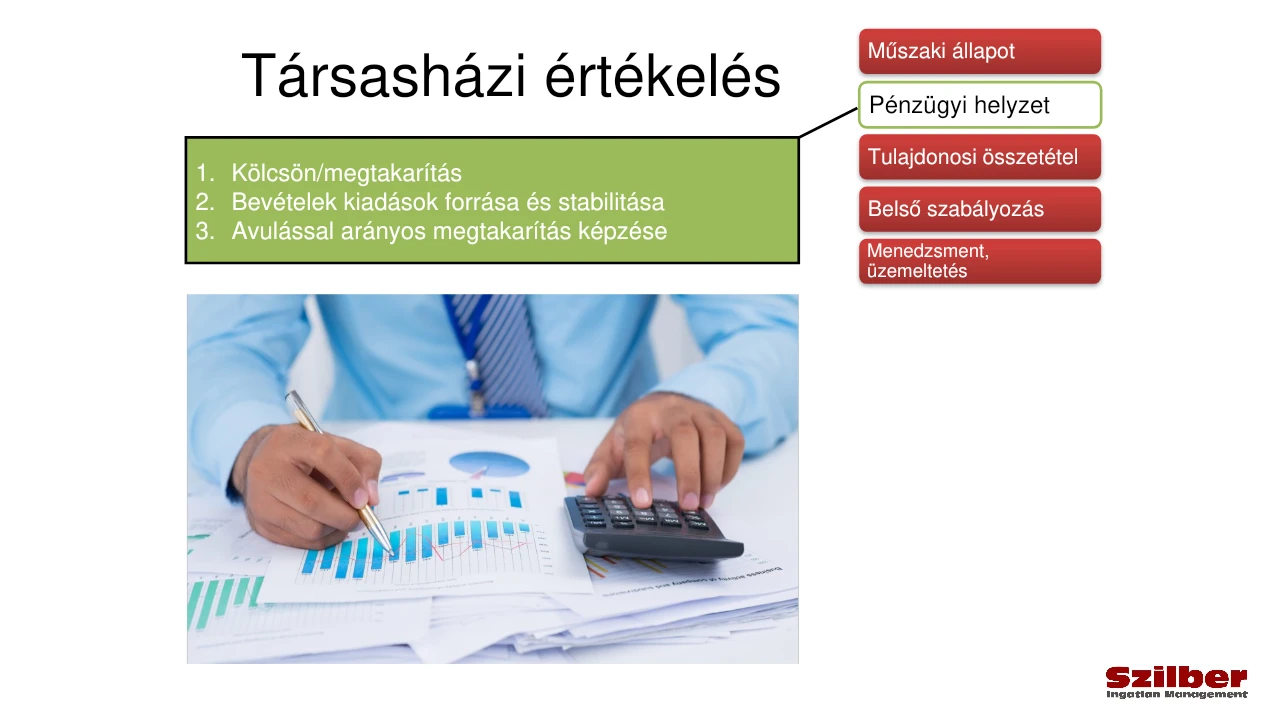
“Build savings in proportion to depreciation”
From Slide 6 of the Original Presentation.
That short line appeared on my financial condition slide. I still consider it important because a reserve balance cannot be judged in isolation. First we need to understand the condition of structures and equipment, the work likely to be needed, and how much time is available to prepare.
If a building looks only as far ahead as next year’s budget, major work can easily arrive as a special assessment. A multiyear plan creates an opportunity to discuss expected costs earlier. The actual amounts and timing must reflect the building’s assessment, available proposals, and the community’s decision.
Savings and Loans Together Provide the Picture
The same slide included “Loans/Savings” and “Sources and Stability of Income and Expenses.” A financial balance is a snapshot. Useful conclusions also require knowledge of existing commitments and the basis of the income.
As an illustration, two buildings may have equal savings, but one has already completed the major necessary renovations while the other still faces substantial work. The account balance is the same, but their preparedness differs. An agent helps the buyer by examining expected uses and existing obligations alongside the balance.
Looking One, Three, Five, or Even Ten Years Ahead
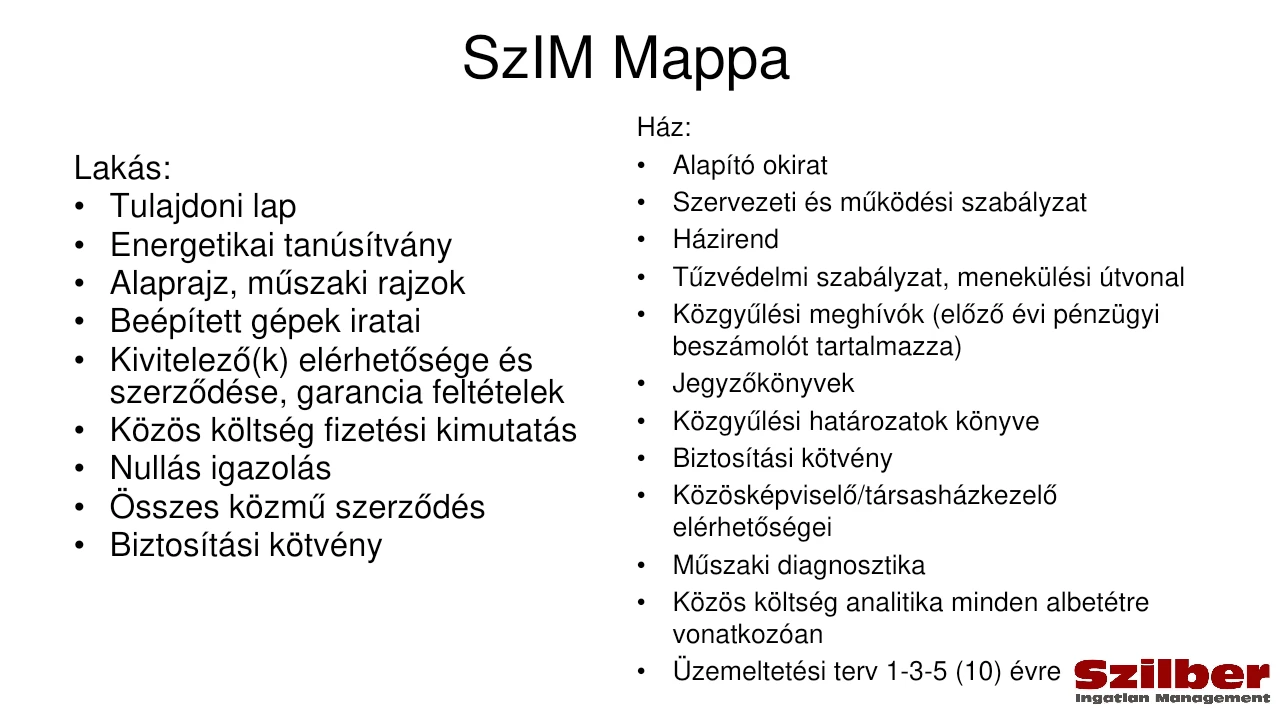
“Operating plan for 1–3–5 (10) years”
From Slide 12 of the Original Presentation.
The slide introducing the SzIM Property File used these planning horizons. Near-term tasks require more detailed preparation, while later work needs regularly reviewed estimates and technical priorities. A longer-term plan is useful because it prompts timely questions and makes deferred work visible.
The plan must be revisited. Conditions, prices, construction options, and the community’s finances can change. Owners gain reassurance when they can see the information behind a revised plan and what will happen in the next period.
What Should a Homebuyer Ask?
What major work does the building face? What has already been approved? What funding has been assigned, and which amounts are only longer-term estimates? A low monthly payment can be evaluated properly only when we know what it covers and what is being left for later.
For me, the 2017 material preserves this principle: protecting condominium assets requires connecting technical work with funding in good time. I aim to share this long-term perspective in my training for Etikus Ingatlanosok. Thank you to Viktória Sándor and Gábor Kirsch for building such an open professional community for sharing knowledge over the years.
Source of the Quotations
This article draws on selected parts of my November 23, 2017 presentation. The source and slide number of each quotation are identified separately. The slides come from the original material. Learn more about the professional community on the Etikus Ingatlanos Website .
← Back to Professional Insights